A cat that once ignored the fountain may suddenly paw at its filter, lick the housing, or wait beside the water stream. That change can look funny. It can also leave you wondering, “why is my cat suddenly obsessed with the water fountain filter?” The answer is not always the filter itself. Moving water, trapped food smells, mineral buildup, or a clogged cartridge may change what your cat notices.
This guide looks at popular cat fountain filters for 2026 and explains what their materials and designs can—and cannot—do. Carbon filters may help reduce odors, while mesh layers can catch hair and debris. Neither makes a fountain maintenance-free. Check the manufacturer’s replacement schedule, rinse components as directed, and watch for changes in water flow. A filter that looks clean may still need replacing. That detail is easy to miss.
Pay attention to the whole picture, not just one curious habit. If your cat is drinking much more than usual, urinating more, vomiting, or acting tired, contact a veterinarian. Sudden thirst can have causes that a new filter cannot fix. And if your cat is simply inspecting the cartridge, a loose edge or appealing scent may explain it. I might be reading too much into a few paw taps; cats are wonderfully odd. Still, a calm check of the fountain, filter, and your cat’s health is a sensible place to start.
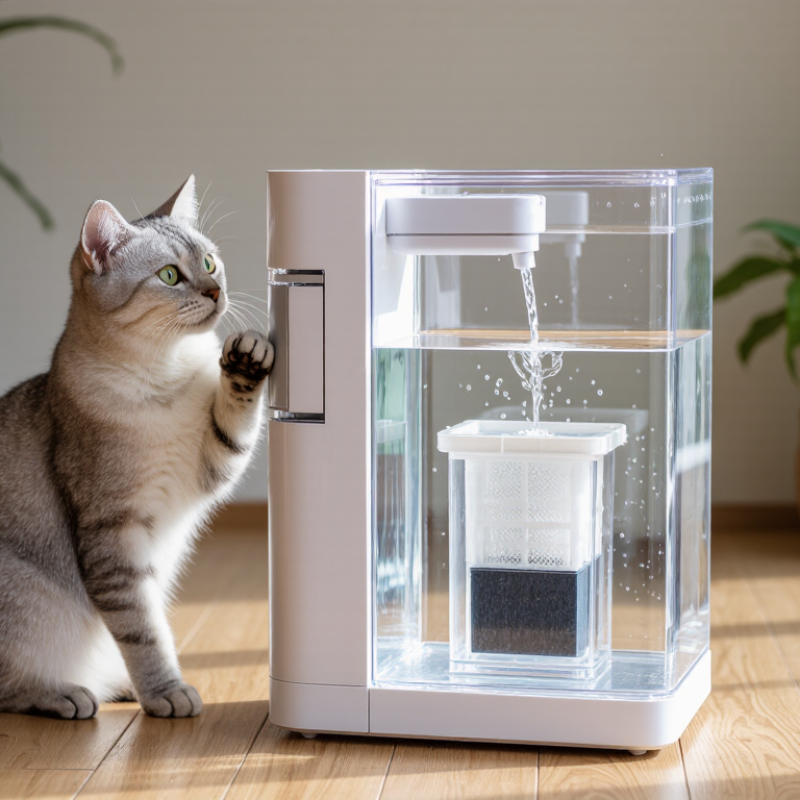
Cat fountain filters usually combine a fine screen with activated carbon. The screen catches loose hair, crumbs, and other visible debris before they reach the pump. Carbon can reduce some tastes and odors, which may make water more appealing. It does not sterilize water or remove every dissolved substance. A clear bowl can still harbor a slippery biofilm. Small, steady changes matter.
Check the filter maker’s replacement schedule, and rinse or replace the cartridge as directed; a clogged filter may slow flow rather than clean more effectively. Wash the bowl and pump regularly, since filters cannot replace cleaning. The U.S. Environmental Protection Agency sets a 500 mg/L guideline for total dissolved solids, but this is a taste-related benchmark, not a cat-specific safety limit. NSF/ANSI standards 42 and 53 define certain aesthetic and health-related filtration claims; certification applies only to stated contaminants and tested conditions. A filter can look reassuring. It is not a water test. If your cat’s thirst has suddenly increased, especially with more frequent urination, contact a veterinarian rather than relying on a fountain change.
Cat fountain filters do different jobs, so compare the layers rather than the packaging. A mesh screen or foam pre-filter catches loose fur and food crumbs before they reach the pump. Activated carbon can reduce some odors and tastes, though it does not make dirty water safe. Some cartridges also use ion-exchange resin to reduce minerals. Results vary with local water and the filter design.
Check the fit. A slightly wrong cartridge can leave gaps or slow the flow. Compare the fountain’s required filter shape, replacement interval, and whether the layers can be rinsed or replaced separately. Rinsing may remove hair, but it does not restore exhausted carbon. Small details matter. A filter that costs less upfront may need replacing more often, so consider the ongoing cost and how easy it is to find the correct size.
A sudden interest in flowing water can have several causes, and a new filter alone may not explain it. Watch whether your cat drinks more, and keep the bowl and pump clean between filter changes. Filter schedules are useful guides, not guarantees; heavy fur, dusty rooms, or hard water may call for closer checks. I’d avoid assuming clearer-looking water means a clean fountain. That’s an easy mistake. If increased thirst persists or comes with other changes, ask a veterinarian rather than relying on a filter upgrade.
Compare the core functions of common filter media. A value of 1 means that function is commonly included in that filter type; 0 means it is not a core function.
Typical configurations vary by product. Foam catches hair and larger debris, activated carbon adsorbs some odor and taste compounds, and ion-exchange resin can reduce certain dissolved minerals. Many cats are attracted to moving water, but a filter does not replace regular cleaning and fresh-water changes.
A cat that suddenly prefers the fountain may be responding to moving water, a quieter pump, or a cleaner taste. The filter helps, but it cannot fix every fountain problem. Choose one made for your fountain’s exact model and size; a filter that sits crooked can let hair and debris pass around it.
Check what the filter contains. A fine mesh or foam layer can catch fur and larger particles, while activated carbon may reduce odors and some tastes. These parts do different jobs. Rinse a new filter as its instructions direct, and never add soap or cleaning chemicals to the drinking water. If your cat sheds heavily, a washable pre-filter can catch fur before it reaches the main cartridge.
Replace filters at the interval listed in the fountain manual, then adjust if several cats share it or the water gets cloudy sooner. Hard water may also leave mineral scale, which a standard filter may not remove. Clean the bowl and pump regularly, too. A fresh filter in a dirty pump is not much help. If your cat’s thirst has sharply increased, or comes with weight loss or frequent urination, contact a veterinarian; a filter change is not a health check.
| 2026 Top Cat Fountain Filters: Why Is My Cat Suddenly Obsessed? — How to Choose a Filter for Your Cat Fountain | ||||
|---|---|---|---|---|
| Filter Type | What It Typically Does | Best Suited For | Care and Replacement | What to Check Before Buying |
| Activated carbon | Can reduce some odors, tastes, and dissolved organic compounds. It does not disinfect water or remove every contaminant. | Homes where tap water has an noticeable taste or odor, when the fountain is designed for a carbon cartridge. | Rinse as directed before use and replace according to the fountain or filter instructions. Carbon can become less effective as it is used. | Check that the cartridge fits the fountain model. Do not assume it removes minerals, bacteria, or all chemicals. |
| Ion-exchange resin | May reduce certain dissolved minerals, depending on the resin and water chemistry. Results vary by product and water supply. | Owners looking for a filter that includes mineral-reduction media. | Replace on the schedule specified for the cartridge. Filter performance depends on the amount and type of minerals in the water. | Look for clear information about the targeted minerals; a general filter is not necessarily a water softener. |
| Foam or sponge prefilter | Traps larger particles such as hair, food crumbs, and debris before water reaches finer filter media or the pump. | Fountains used by long-haired cats, multi-cat households, or cats that shed heavily. | Rinse regularly and replace if torn, clogged, or no longer fitting securely. Follow the fountain’s cleaning directions. | Confirm the size and shape match the fountain. A prefilter does not replace routine water changes or fountain cleaning. |
| Fine mesh or particulate layer | Captures some visible particles as water circulates through the fountain. | Fountains where loose debris or hair is a frequent issue. | Inspect and rinse as directed. Clean or replace it when clogged, damaged, or when water flow is reduced. | Check whether the layer is washable or disposable; fine mesh does not remove dissolved substances. |
| Multi-layer cartridge | Combines materials such as a particle-catching layer, activated carbon, and sometimes ion-exchange resin. | Owners seeking several types of filtration in one cartridge compatible with their fountain. | Replacement intervals vary with use, water quality, and cartridge design. Replace sooner if flow drops or the filter is visibly dirty. | Check the listed filter materials, exact fit, and replacement guidance. A multi-layer design does not guarantee removal of every contaminant. |
| Sudden increase in drinking | A fountain may attract a cat because of moving water, but a sudden change in thirst can also have medical causes. | Any cat whose drinking or urination has noticeably changed. | Keep fresh water available and note changes in drinking and litter-box habits. | Contact a veterinarian if increased thirst persists or comes with frequent urination, weight loss, vomiting, or other changes. A fountain filter is not a treatment for excessive thirst. |
A fountain can catch a cat’s attention with a soft trickle, a ripple of light, or water that seems newly fresh. Some cats prefer moving water because it is easier to notice and may taste less stale than water left in a bowl. The change can seem sudden. Sometimes the fountain is simply in a quieter spot, away from food or a busy walkway.
Small details matter. A cat may sip from the stream, paw at the surface, then return several times a day. Keep the reservoir clean, rinse away slippery buildup, and replace the filter as directed. A filter can trap some debris and odors, but it does not make dirty equipment safe. Cats can be particular, and honestly, the reason is not always obvious.
Enjoy the interest, but watch how much your cat drinks and urinates. A sudden increase in thirst can have medical causes, especially with weight loss, vomiting, or low energy. If the change is marked or continues, contact a veterinarian rather than assuming the fountain explains everything. One extra sip may mean little. A new pattern deserves attention.
A cat lingering at the fountain may look curious, but a sudden change in drinking deserves attention. Notice whether the bowl empties faster, your cat urinates more often, or the litter clumps grow larger. Increased thirst can accompany conditions such as kidney disease, diabetes, or other health problems; drinking behavior alone cannot identify the cause. A cleaner filter or cooler weather may change fountain use, too. It is easy to blame the fountain and miss a pattern.
For a few days, note water levels, meals, litter-box changes, and any new medications. Keep fresh water available, and do not restrict drinking to test your cat. Contact a veterinarian if the change persists, or sooner if your cat seems weak, vomits, loses weight, or stops eating. Straining to urinate or producing little urine needs urgent veterinary care, especially in male cats. Bring your observations to the appointment; even an imperfect log is more useful than a guess.
A fine screen catches loose fur, crumbs, and other visible debris. Activated carbon may reduce some tastes and odors. It does not sterilize water.
No. A clear bowl can still contain slippery biofilm. Wash the bowl and pump regularly, even when the water looks fresh. Looks can mislead.
Choose one made for your fountain’s exact model and size. A crooked cartridge can leave gaps where fur and debris pass through. Fit matters.
Follow its instructions. Rinse it as directed, and keep soap and cleaning chemicals out of drinking water.
Follow the replacement interval in the fountain manual. Replace it sooner if several cats share the fountain or water clouds early. A clogged filter may slow the flow, not clean more effectively.
A standard filter may not remove mineral scale. You may still see pale deposits around the bowl or pump.
A washable pre-filter can catch loose fur before it reaches the main cartridge. It helps, but does not replace regular cleaning.
Contact a veterinarian if your cat suddenly drinks much more, urinates more often, or loses weight. A filter change is not a health check.
Cat fountain filters help keep water fresher by trapping hair, food particles, and other debris, while some filter materials can also reduce odors or improve taste. In 2026, compare filter types by their layers, filtration purpose, replacement frequency, and compatibility with your fountain. Check the fountain’s instructions before choosing a replacement, and select a filter that fits correctly and is easy to maintain. Regular cleaning and timely filter changes matter too, since a filter cannot keep water clean if the fountain itself is dirty.
If you’re wondering, “why is my cat suddenly obsessed with the water fountain filter,” your cat may be responding to the movement, sound, or taste of the water—or simply finding the fountain more appealing than a still bowl. Keep fresh water available and observe how much your cat drinks. A sudden, persistent change in drinking habits, especially alongside changes in urination, appetite, or energy, can signal a health concern and warrants advice from a veterinarian.

Purr Pet