A power outage can turn an ordinary cat-feeding routine into a quiet safety problem. The refrigerator warms, automatic feeders stop, and familiar meal times may shift. If you are asking, "what happens to my cat's meal schedule during a power outage", the answer is practical. Keep feeding times consistent when food remains safe. Cats often notice small changes. A missed meal may cause anxiety, begging, or vomiting in some animals.
This guide combines practical pet-care experience with standard food-safety principles. Before an outage, store unopened wet-food pouches, clean bowls, bottled water, and a manual can opener together. Keep dry food sealed and measured. During the outage, serve small portions instead of leaving wet food near a warm window. Discard opened wet food that has stayed unrefrigerated too long. When uncertain, throw it away. It is frustrating, but spoiled food is not worth the risk. A cooler with ice packs can help preserve food. Raw diets require extra caution during temperature changes.
Your cat may need a different plan. Kittens, senior cats, diabetic cats, and cats with kidney disease can worsen quickly after feeding changes. Ask your veterinarian for an emergency schedule, especially when insulin is involved. Never double a missed medication dose without professional advice. Watch for repeated vomiting, weakness, refusal to eat, or unusual thirst. Simple preparation helps more than perfect planning, although even careful owners can misjudge supply needs. This article explains safe feeding, food storage, and ways to restore a normal routine after the electricity returns.
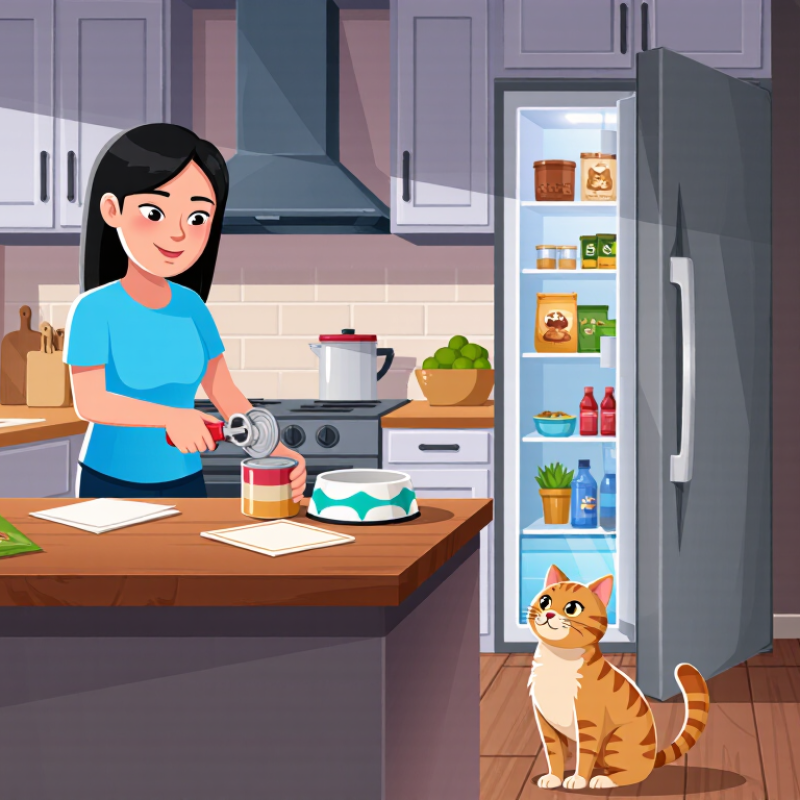
How to Feed Your Cat During a Power Outage?
Assess the outage before opening the refrigerator. The FDA advises discarding perishable food kept above 40°F for four hours or longer. An unopened refrigerator usually stays cold for about four hours, but this depends on room temperature and door openings. Keep the door shut. Write down when the power failed. A simple note prevents guessing later.
Check wet cat food, opened cans, cooked meat, and refrigerated treats with a food thermometer. If the temperature is unknown, treat the food as unsafe. Do not rely on smell, appearance, or a cat’s willingness to eat it. Cats may accept spoiled food, then develop vomiting or diarrhea hours later. I have learned that “still cool” is not a reliable measurement. That judgment can be wrong.
Use sealed dry food if it remains clean and dry. Provide fresh water in a clean bowl, even if your cat eats wet food normally. If frozen food still contains ice crystals, it may remain usable, but refreezing can affect quality. When uncertain, discard it. Food waste feels frustrating, especially during a long outage, yet veterinary treatment can create a greater problem. Keep small shelf-stable portions available for emergencies, and replace them before their dates expire.
During a power outage, your cat’s food plan should begin with energy needs, not guesswork. Veterinary RER means Resting Energy Requirement: 70 × kg⁰·⁷⁵. For a 4-kilogram cat, this equals about 198 kilocalories daily. Divide that amount between the usual meals, then check the food label for calories per gram or can.
RER is only a starting point. The NRC’s Nutrient Requirements of Dogs and Cats explains that age, activity, illness, and reproductive status change energy needs. A healthy adult may need more than RER for maintenance, while an overweight or sedentary cat may need careful adjustment. AAHA and AAFP feline guidelines also support individualized nutrition plans. Do not sharply reduce food because supplies seem limited. Cats can become medically vulnerable after inadequate intake. A common mistake is trusting a familiar portion without checking its calorie density.
Tips: Keep several days of sealed food and clean water in a cool container. FDA food-safety guidance recommends discarding perishable food left above 4°C for over two hours, or one hour in very hot conditions. Use a kitchen scale when possible. A small battery scale is useful. If refrigeration fails, open only one portion at a time. I would also record your cat’s normal weight and appetite; memory becomes unreliable during a stressful outage. Contact a veterinarian if your cat refuses food for a day, vomits repeatedly, or seems unusually weak.
During a power outage, fresh water becomes a daily priority. Aim for approximately 50–60 mL per kilogram of body weight each day. A 4-kilogram cat may need about 200–240 mL daily. This includes moisture from wet food, not only drinking water. The number is a guide, not a perfect rule.
Place clean bowls in quiet, familiar areas. Keep one near your cat’s resting place and another away from litter boxes. Refresh the water regularly, even if it looks clear. Some cats drink more from wide, shallow bowls because their whiskers do not touch the sides. My practical mistake was offering one bowl and assuming it was enough. Cats can be surprisingly selective.
Watch for warning signs. Sticky gums, unusual tiredness, sunken eyes, or very little urine may indicate dehydration. Do not force water into your cat’s mouth, as this can cause choking or stress. Offer small amounts of wet food if refrigeration is unavailable, but discard food that has stayed warm too long. Cats with kidney, heart, or urinary conditions may need different fluid guidance. Contact a veterinarian when possible, especially if your cat refuses water for several hours or shows worsening symptoms.
How to Feed Your Cat During a Power Outage?
Use Shelf-Stable Food and Discard Open Wet Food Within Two Hours
During a power outage, unopened shelf-stable cat food is the safest backup. Store dry food in a sealed container, away from heat and humidity. Keep several clean bowls available. Water matters too. The American Veterinary Medical Association recommends constant access to fresh, clean water for cats. Replace water if dust, debris, or unusual warmth enters the bowl.
Treat opened wet food as time-sensitive. The USDA Food Safety and Inspection Service advises discarding perishable food left above 40°F for more than two hours. The limit falls to one hour when temperatures exceed 90°F. This rule is not perfect for every home, but it is a safer boundary than guessing. Put a clock beside the food bowl. If the electricity returns, do not automatically save food that already sat out. Smell is not a reliable safety test.
Serve small portions of shelf-stable food, then reseal the package immediately. Check the package for damage, swelling, leaks, or an unusual odor before serving. FDA pet-food handling guidance also supports prompt refrigeration or disposal of unused wet food. Without a working refrigerator, discard it within two hours. I have seen owners stretch food to avoid waste, but that choice can create avoidable stomach problems. Monitor appetite, vomiting, diarrhea, and drinking. Contact a veterinarian if symptoms persist or your cat refuses food.
| Food or Supply | Recommended Use During an Outage | Storage and Safety Guidance | Practical Planning Amount |
|---|---|---|---|
| Unopened wet food | Use when available, provided the container is intact and the food is within its stated date. | Shelf-stable cans or pouches do not require refrigeration before opening. Store them in a cool, dry place away from direct sunlight. | Keep enough for the expected outage plus a small emergency reserve. |
| Dry cat food | Use as the primary option if wet food cannot be safely refrigerated. | Keep the food sealed, dry, and protected from heat, moisture, insects, and rodents. Follow the package feeding instructions. | Measure the cat’s normal daily portion rather than offering unlimited food. |
| Opened wet food | Serve only the amount the cat is likely to eat promptly. | Discard leftovers that have been at room temperature for more than two hours. Discard them after one hour if the temperature is above 90°F (32°C). | Open smaller portions when possible to reduce waste and food-safety risks. |
| Refrigerated leftovers | Use only if the refrigerator has remained safely cold or the food has been kept in a properly chilled cooler. | Keep the refrigerator closed as much as possible. Perishable food should be discarded if it has been above 40°F (4°C) for two hours or more. | Label opened containers with the opening time and use clean utensils. |
| Drinking water | Provide fresh water throughout the outage, even if the cat is eating wet food. | Use a clean, covered container and replace water if it becomes dirty or contaminated. | A practical minimum is about 1 ounce of water per pound of body weight per day, including water from food; individual needs vary. |
| Ice or chilled cooler | Use to protect opened wet food and other perishable items when refrigeration is unavailable. | Keep the cooler at 40°F (4°C) or below, use a food thermometer when possible, and minimize opening it. | Prepare enough ice or cold packs to maintain safe temperatures for the planned outage period. |
| Emergency feeding supplies | Keep a manual can opener, bowls, measuring cup, resealable containers, paper towels, and a food thermometer available. | Wash bowls and utensils with safe water. Do not use visibly spoiled food or damaged, swollen, leaking, or severely dented cans. | Store supplies together with the cat’s emergency food and medical information. |
| Veterinary or prescription diet | Maintain the cat’s usual diet whenever possible, especially when a medical condition requires specific food. | Avoid sudden diet changes unless necessary. Contact a veterinarian if the cat refuses food, vomits repeatedly, develops diarrhea, or needs a prescription diet that is unavailable. | Keep several days of the cat’s usual food and any essential medication in the emergency kit. |
A power outage can disrupt your cat’s feeding routine quickly. Keep clean water in several shallow bowls around the home. Cats may drink more in warm rooms, even when they eat less. Check each bowl regularly for fur, dust, or spilled litter. Offer the usual food when possible, because sudden diet changes can cause stomach upset.
Wet food becomes unsafe after sitting at room temperature for too long. Remove uneaten portions promptly, especially in a warm room. Dry food is easier to manage, but store it in a sealed container.
Watch your cat’s appetite, urination, energy, and gums. Dry or sticky gums may suggest dehydration. A cat that refuses food for a full day needs veterinary advice, especially if it is overweight or medically fragile. I might underestimate how quietly cats hide discomfort.
Tips: Write down feeding times and water intake. Use a clean measuring cup if practical. Keep a small supply of familiar food and bottled water. Never force food or water into your cat’s mouth, as choking or inhalation can occur. Seek urgent veterinary help for repeated vomiting, collapse, severe weakness, breathing trouble, or an inability to urinate. During a long outage, arrange professional guidance rather than guessing.
An unopened refrigerator usually stays cold for about four hours. Keep the door closed. Write down the outage time. Room temperature and door openings can change the limit.
Check them with a food thermometer when possible. Discard food above 40°F for four hours or longer. If the temperature is unknown, discard it. Smell and appearance can mislead you.
No. Cats may eat spoiled food without hesitation. Vomiting or diarrhea can appear hours later. “Still cool” is not enough. I would not trust that judgment now.
Sealed dry food is usually practical if it remains clean and dry. Store small emergency portions in advance. Replace them before their dates expire. A clean, sealed container helps protect the food.
Food with ice crystals may still be usable, but quality can decline after thawing. When uncertain, discard it. Food waste feels frustrating, but illness can create a larger problem.
A general guide is 50–60 milliliters per kilogram of body weight daily. A 4-kilogram cat may need 200–240 milliliters. This includes moisture from wet food. It is only an estimate.
Use clean bowls in quiet, familiar places. Keep one near the resting area and another away from litter boxes. Wide, shallow bowls may feel easier for sensitive whiskers. One bowl may not be enough.
Watch for sticky gums, unusual tiredness, sunken eyes, or very little urine. Refusing water for several hours is concerning. Do not force water into the mouth. Contact a veterinarian when possible, especially if symptoms worsen.
During a power outage, your cat’s feeding routine may need to change temporarily, so understanding what happens to my cat's meal schedule during a power outage is essential. First, assess how long the refrigerator has been without power. Perishable food should generally be discarded if it has been above safe temperatures for more than four hours. Calculate your cat’s approximate daily calorie needs with the veterinary RER formula, 70 × kg⁰·⁷⁵, then divide the amount into the usual number of meals to maintain consistency.
Provide clean drinking water, aiming for approximately 50–60 mL per kilogram of body weight each day, while recognizing that cats eating wet food may drink less. Shelf-stable food can be useful during an outage, but opened wet food should be discarded within two hours if it cannot remain properly chilled. Monitor your cat for dehydration, reduced appetite, vomiting, diarrhea, weakness, or unusual behavior. Contact a veterinarian promptly if these signs appear or if your cat refuses food or water.

Purr Pet