A silent cat fountain can look like a small appliance problem, but the cause is often hidden under the pump cover. Hair, food particles, mineral scale, and slippery biofilm may block the impeller. Learning how to clean a cat fountain pump that stopped working can restore water flow and protect your cat’s drinking routine. It also prevents repeated guesswork.
Dr. Jane Brunt, DVM, offers a useful reminder: “Make clean water easy for cats to choose.” That principle matters because many cats avoid stale-smelling water, even when the bowl appears full. This guide explains how to unplug the fountain safely, remove the pump, open its small cover, and clean the internal channel. You will see practical details, including where buildup hides and why the impeller deserves careful attention.
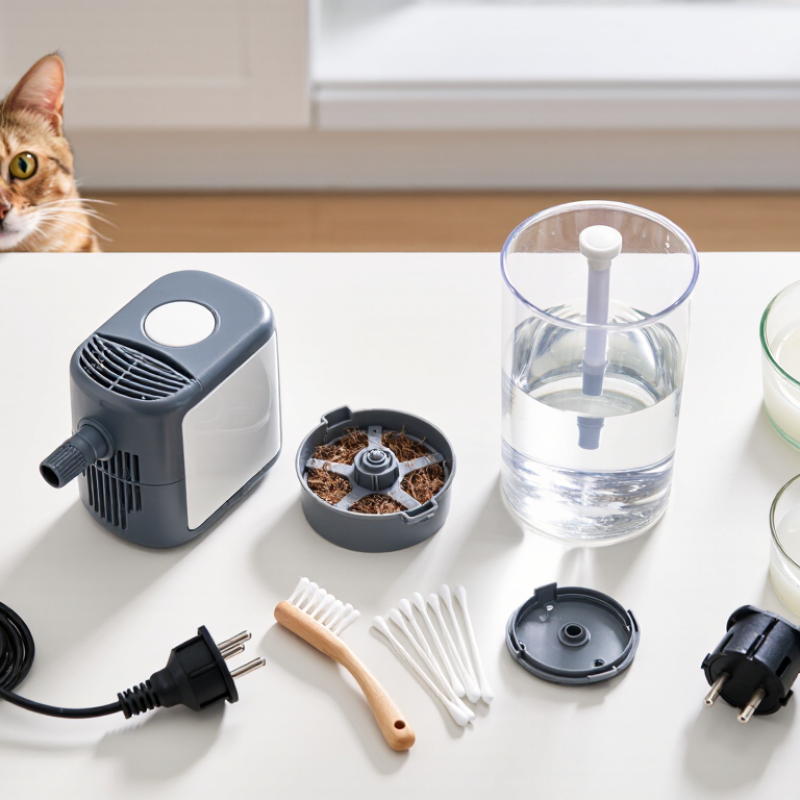
Use a soft brush, cotton swab, and diluted white vinegar for mineral deposits. Never force a stuck rotor. Rinse every part thoroughly before reassembly. A tiny grain of litter can stop the mechanism again. Check the cord, adapter, and water level if the pump remains silent. Sometimes cleaning helps. Sometimes the motor has failed, and replacement is more sensible.
The process is not difficult, but it rewards patience. I have found that rushing the final rinse can leave vinegar odor behind. Cats notice that quickly. This introduction focuses on clean handling, realistic troubleshooting, and the limits of home maintenance.
How to Clean a Cat Fountain Pump That Stopped Working?
Identify Why the Cat Fountain Pump Stopped Working
Unplug the fountain before touching the pump or water. This simple step prevents shocks and protects the motor from running dry. Remove the pump and check the water level, intake openings, and connecting tube. A low reservoir can make the pump hum without moving water. Kinked tubing can cause the same symptom.
Open the pump cover if the design allows it. Look for fur, food particles, or slippery biofilm around the impeller. These materials can jam the small rotor. Rinse the parts under clean, lukewarm water, then use a soft brush around the intake slots. Never force the impeller with a sharp object. Mineral scale may also restrict movement, especially when hard water leaves a pale crust. A brief soak in diluted white vinegar can loosen scale, but rinse every part thoroughly afterward.
Check for an air lock. Refill the fountain above the pump, reconnect the tube, and gently tilt the unit to release trapped air. If the pump stays silent, inspect the power cord and plug for damage. Do not use damaged electrical parts. I once blamed a dirty impeller, but the real problem was a loose connection under the reservoir. That mistake reminded me to test each cause separately. If the motor becomes hot, smells unusual, or only works intermittently, stop cleaning and replace it with a compatible, safely rated pump.
| Possible Cause | Common Signs | What to Check | Recommended Cleaning or Fix | Safety Note |
|---|---|---|---|---|
| Blocked intake screen | The pump hums, but little or no water moves. | Inspect the small inlet openings for hair, food particles, dust, or mineral flakes. | Unplug the pump, remove the cover, and rinse the intake screen under clean running water. Use a soft brush for trapped debris. | Disconnect power before touching the pump or placing hands in the water. |
| Impeller jammed | The pump is noisy, vibrates, starts intermittently, or stops after running briefly. | Open the pump housing and check whether the rotating impeller is restricted by hair or sludge. | Remove visible debris with tweezers or a soft brush. Wipe the impeller chamber and rinse all loose residue. | Do not force the impeller or use sharp metal tools that could damage internal parts. |
| Mineral scale buildup | Water flow gradually decreases and white or chalky deposits appear. | Look for hard deposits around the impeller, intake, outlet, and pump housing. | Soak removable pump parts in a solution of equal parts white vinegar and water for about 15–30 minutes, then brush and rinse thoroughly. | Keep vinegar away from the cat and rinse every part completely before reassembly. |
| Water level too low | The pump makes a rattling sound, draws air, or shuts off during use. | Confirm that the water covers the pump and remains above its minimum operating level. | Refill with fresh water to the indicated level. Clean the fountain and pump if the water level dropped because of evaporation or debris. | Never operate a submersible pump while it is dry; dry running can overheat or damage it. |
| Air trapped inside the pump | The pump vibrates or hums after refilling but does not establish steady flow. | Check whether the pump is fully submerged and positioned upright. | Unplug and reposition the pump underwater. Tilt it gently to release trapped air, then reconnect power. | Keep the electrical connection and plug away from splashing water. |
| Dirty or restricted outlet tube | The motor runs, but water does not reach the spout or falls unevenly. | Inspect the outlet tube for kinks, algae, hair, or dried mineral deposits. | Flush the tube with clean water and use a narrow soft pipe brush if necessary. Replace the tube if it is cracked or permanently blocked. | Avoid using bleach or other harsh chemicals that may leave harmful residues. |
| Electrical supply problem | The pump is completely silent and shows no vibration. | Test the outlet, inspect the power cord for damage, and check that all connectors are firmly joined. | Reconnect the power supply or use a known working outlet. Do not attempt to repair a damaged sealed pump or frayed cable. | Keep damaged electrical components out of use and replace them with compatible parts. |
| Worn pump motor | The pump remains silent or overheats after cleaning, refilling, and checking the power supply. | Confirm that the impeller spins freely and that there is no blockage or low-water condition. | If the motor still fails after basic cleaning and testing, replace the pump with a compatible unit rather than opening the sealed motor casing. | Stop using the pump if it becomes unusually hot, smells burnt, or trips electrical protection. |
Gather a soft toothbrush, cotton swabs, a shallow basin, towels, mild dish soap, and gloves. Keep a small tray nearby for screws.
Unplug the fountain before touching water. Dry your hands completely. Pull the plug itself, never the cord. Move the adapter away from wet surfaces.
Hair, slime, and mineral grit can block the impeller. The pump may hum while remaining unable to move water.
Remove the pump from the basin first. Follow its manual, because covers and clips vary. Apply gentle pressure near the seam. Do not force it.
Lift out the small impeller carefully. Use a soft toothbrush or cotton swab around its shaft and cavity. Rinse parts with lukewarm water.
Soak removable parts in diluted white vinegar for about 15 minutes. Rinse every piece thoroughly afterward. Never leave cleaning solution inside the pump.
Check the impeller for chips, wobbling, or magnetic damage. Inspect the cord, plug, housing, and rubber seals for cracks.
Reassemble the pump and fill the fountain above its minimum line. Test it before returning it to your cat. A quiet hum is normal. Scraping is not.
Stop using the damaged component immediately. Do not reconnect power. Arrange replacement through a qualified service channel. I sometimes rush this step, but that is unsafe.
When a cat fountain pump stops working, the first step is to identify the likely cause, such as low water, clogged intake openings, trapped air, loose connections, or worn parts. To learn how to clean a cat fountain pump that stopped working, gather clean water, a soft brush, a small cloth, and a safe cleaning tool. Unplug the fountain, remove it from the power source, and take out the pump carefully before opening its cover.
Disassemble the pump gently and remove hair, slime, mineral buildup, and other debris from the impeller, intake area, and internal channels. Rinse each part, clean it with a soft brush, and inspect for cracks, corrosion, or damaged components. After everything is clean and dry, reassemble the pump, place it securely in the fountain, refill the basin to the proper level, and reconnect the power. Test the water flow and listen for unusual noise. If the pump still does not operate, replacement may be safer than forcing a damaged part to work.

 Purr Pet