A quiet cat fountain can make a bedroom feel calmer, especially during nighttime drinking. Water should sound like a soft trickle, not a kitchen appliance. Even a small motor may create a steady hum through a bedside table or wooden floor. That vibration can disturb light sleepers. It may also wake cats that prefer peaceful, predictable spaces.
The key question is how to tell if a cat fountain is actually quiet enough for a bedroom. Start by checking the manufacturer’s noise claim, but do not trust numbers alone. Decibels may vary with water level, filter condition, and surface placement. Test the fountain at night, when background noise is minimal. Place your ear near the pillow, not only beside the fountain. Listen for buzzing, clicking, splashing, and sudden pump changes. A rubber mat can reduce vibration, while keeping the water above the pump intake may prevent rattling. Small details matter.
Quiet does not mean silent. That expectation may be unrealistic. A gentle water sound can even mask occasional household noise. However, a fountain that repeatedly wakes you or your cat is not bedroom-friendly. Veterinary guidance commonly supports fresh, accessible water, but every cat has different preferences. Some cats enjoy moving water, while others avoid mechanical sounds. Observe drinking habits for several nights. A reliable choice should combine low noise, stable construction, easy cleaning, and safe materials. The best fountain is not merely advertised as quiet. It should remain comfortably quiet in your actual bedroom.
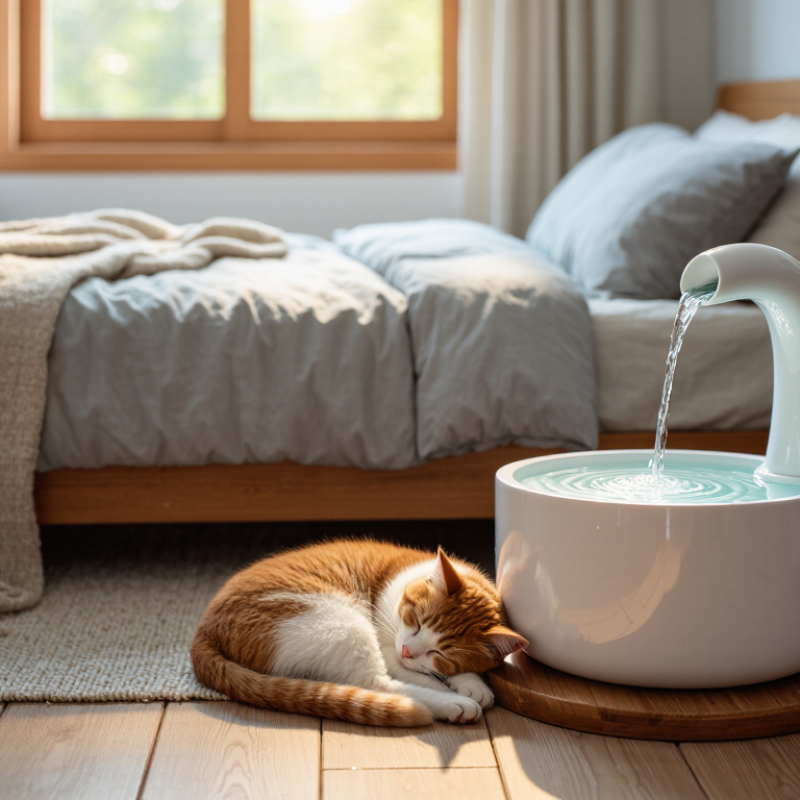
A bedroom-friendly cat fountain should make a soft trickle, not a steady buzz. Listen for pump vibration, rattling parts, and splashing water. A well-fitted pump and stable base can reduce unwanted noise. Ceramic or heavier designs may stay steadier on a hard floor, though construction matters more than material alone. Check whether the pump sits securely and whether water flows smoothly over the surface. Even a quiet model can sound loud beside a bed.
Sound changes with water level and upkeep. When the reservoir runs low, a pump may become noisier, so follow the maker’s minimum-fill guidance. Hair or mineral buildup can also affect the pump and interrupt smooth flow. Clean it regularly, and listen again after reassembly. Tiny details matter. A fountain that seems quiet in a bright shop may feel different at 2 a.m.; room acoustics and personal sensitivity vary.
Tips: Place the fountain on a level, sturdy mat away from the bed and walls. Fill it before bedtime, then listen from your pillow for several minutes. If you hear a hum, check the water level and pump seating. Don’t assume every faint sound is harmless—or a defect. Some trial and error is normal.
A fountain may sound gentle in a kitchen but intrusive beside a bed. Repeated splashing, motor hum, or sudden pump vibrations can interrupt sleep, especially in a quiet room. Even brief awakenings may make it harder to settle again. A quieter fountain helps keep the bedroom calmer, though sensitivity to sound varies from person to person.
Noise can also shape a cat’s drinking habits. Some cats approach readily when water flows softly; others hesitate if a pump rattles or splashes loudly. Watch what happens at home: does your cat pause, lean away, or drink more comfortably when the room is still? Small details matter. A fountain placed on a stable mat, away from the bed, may reduce vibration and nighttime disturbance. Keep it clean, too, since residue can affect water quality and discourage drinking. Quiet is helpful, not magic. Cats may still prefer a plain bowl, and a noise that seems minor to us can feel different at floor level.
A bedroom fountain should sound like a soft background trickle, not a tiny pump humming beside your pillow. Look for a low-voltage pump with vibration-damping feet and a stable base. These features help limit buzzing transmitted through a nightstand or hard floor. A broad, shallow water path can also reduce splashing. Still, “quiet” is not a universal number; room acoustics and distance change what you hear.
Check independent noise measurements when available, and compare them at the same distance and setting. The World Health Organization’s Guidelines for Community Noise recommend keeping continuous indoor bedroom noise below 30 dB(A) to support good sleep. That is a useful reference, not a guarantee that every fountain under that level will feel quiet.
Listen for several minutes in the actual bedroom. A brief test can miss an intermittent rattle. Keep the water level within the maker’s marked range, since low water may expose more pump noise. Clean the intake regularly, too; debris can make a once-quiet fountain chatter. A small detail, but it matters.
WHO, Guidelines for Community Noise, 1999.
A quiet cat fountain can suit a bedroom, but placement matters as much as the pump. The World Health Organization’s Night Noise Guidelines for Europe recommend keeping bedroom noise below 30 dB(A) at night for good-quality sleep. That is a room-level target, not a guarantee that any fountain will be inaudible. Check the manufacturer’s measured sound level, then listen from your pillow. A faint motor hum may seem harmless in daylight and irritating at 2 a.m.
Choose a fountain with a stable base, accessible pump, and replaceable filter. Ceramic or stainless-steel models can be easier to clean than scratched plastic, though weight and cleaning effort matter too. Look for a low-water warning or a clear reservoir, since pumps can grow louder as water drops. Place the fountain on a level, waterproof mat, away from the bed and shared walls. Keep it clear of curtains, cords, and litter; nearby litter dust can settle in the water. Leave enough space for your cat to approach without squeezing past furniture.
Tips: Fill the bowl before bedtime and listen for rattles. If the sound carries, move it to a hallway rather than turning it off automatically. Track whether your cat drinks and whether the new location feels comfortable. I would not assume quieter always means better: a timid cat may avoid a fountain tucked into a dark corner.
A quiet cat fountain can fade into the background at bedtime, but its sound may change as parts collect fur, mineral deposits, or dust. Check it every few days. A soft hum is usually less distracting than a new rattle or buzz. If the sound suddenly changes, unplug the fountain before inspecting it.
Clean the bowl and pump according to the maker’s care instructions, often every week or two depending on use. Remove trapped hair from the pump inlet with a small, soft brush. Rinse away soap thoroughly; residue can affect the water and leave parts slippery. Hard water may leave pale crust around the pump, so wipe it away before it builds up. Replace filters on schedule, since a clogged filter can restrict flow and make the pump work harder.
Keep the fountain on a level, stable surface. A folded rubber mat can reduce vibration against a bedside table, but keep the unit steady and its cord dry. Maintain the water line within the recommended range; too little water may expose the pump and increase noise. Listen after refilling. Small things matter. If a cleaned pump still rattles, or its sound keeps getting louder, the pump may be worn and need replacement. I sometimes miss the early signs myself, so a quick listen at refill time is a useful habit.
Look for a soft trickle, secure pump, smooth water flow, and a stable base. A faint hum may still seem loud beside your pillow.
Yes. Low water can expose the pump and create louder humming or rattling. Fill it before bedtime.
Place it on a level, sturdy mat away from walls and the bed. A rubber mat may reduce floor vibration.
Fill the fountain, then listen from your pillow for several minutes. Nighttime acoustics can surprise you.
Yes. Some cats approach gentle flowing water, while others avoid rattling or sudden splashes. Watch closely.
Check it every few days and clean the bowl and pump regularly. Many homes need cleaning every week or two.
Hair, mineral crust, dust, clogged filters, and loose pump seating can disrupt smooth operation. Tiny buildup matters.
Unplug it before inspection. Check the water level, pump inlet, filter, and seating. I sometimes miss early warning signs. Listen during each refill.
A quiet cat fountain can make a bedroom more comfortable for both people and pets. Gentle, consistent water flow may encourage a cat to drink without creating distracting sounds that interrupt sleep. The key is to consider more than a product’s advertised noise level: how to tell if a cat fountain is actually quiet enough for a bedroom depends on listening for humming, splashing, and vibration in the room where it will be used, especially during quiet nighttime hours.
Features such as a low-vibration pump, steady flow, and a design that limits splashing can help reduce noise. Choose a stable fountain that suits the cat’s drinking habits, then place it on a level surface away from the bed and walls that might amplify vibration. Regularly refill it, clean its components, and check that the pump is properly seated. These simple choices and routine care can help keep noise low over time while maintaining a pleasant drinking spot for the cat.

Purr Pet